Flexible Stone Installation
Flexible Stone Grouting & Sealing
When joints, grout-like finishes or protective sealers may be appropriate—and why they must be tested with the selected panel.
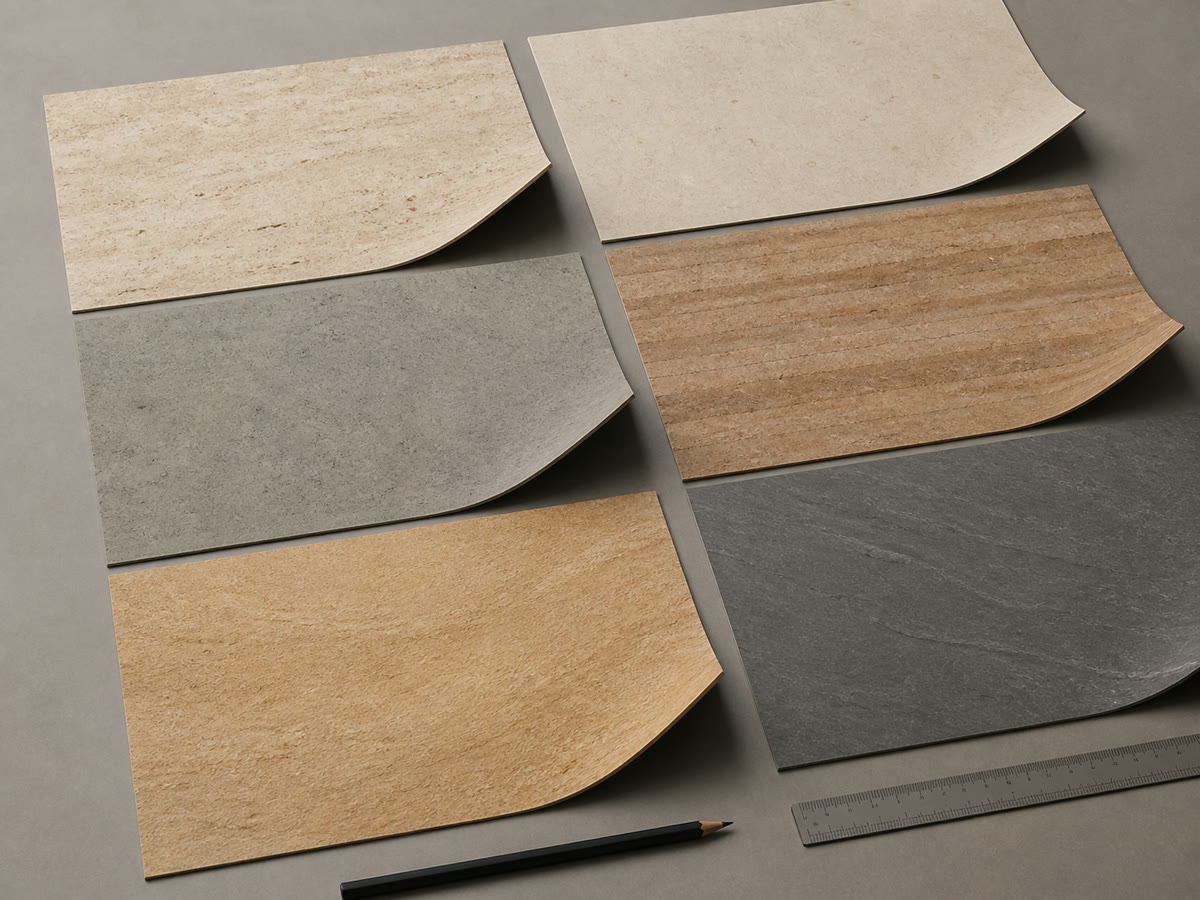
Overview
Flexible stone panels do not all use the same joint or sealing approach. Some designs use close visual joints, some use expressed joints, and some require a compatible protective treatment. The approved mock-up should define the complete finish.
Key steps
01
Confirm whether joints are required
Base the joint layout and width on panel format, intended appearance, substrate joints, dimensional tolerance and the supplier’s written guidance.
02
Test colour and compatibility
Joint fillers, sealants and sealers can change colour, sheen or surface texture. Test them on the actual finish and allow full curing before approval.
03
Apply to the approved sample standard
Control joint depth, tooling, cleaning and edge protection. Follow coverage, temperature and curing limits for any protective treatment.
Sealing is not a universal requirement
A sealer should only be specified when it is compatible with the selected panel and serves a defined project need. It must not be used to imply a universal waterproof or all-weather rating for the complete assembly.
Curved-wall note
On curved surfaces, joint layout and panel orientation should be tested together with the minimum practical radius, substrate accuracy and adhesive coverage. Use a full-size mock-up before setting the production method.
Frequently asked questions
Does flexible stone always need sealer?
No. The need depends on the product, finish, exposure and maintenance plan. Use only a tested, compatible treatment when one is specified.
Can grout be used between panels?
Only if the panel supplier approves the exact material and method. Joint fillers can stain, scratch or restrict movement if they are not compatible.