From sample box to project site
Flexible Stone Packaging & Shipping
Updated
Flexible stone packaging and shipping are planned around the selected product size, quantity and shipping route. Send the destination and requested arrival window so packing and freight can be reviewed with your quote.
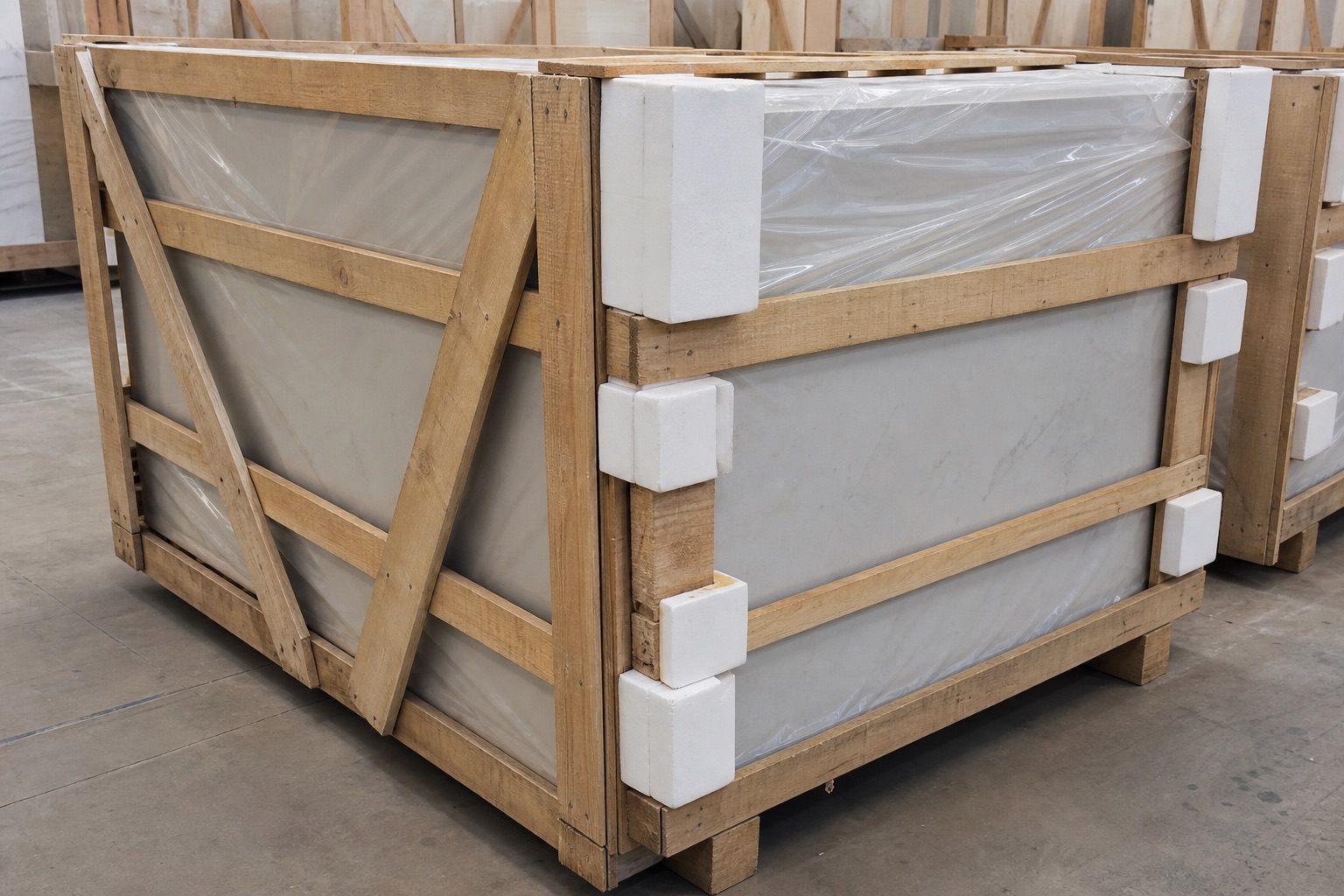
The packing reference above shows wrapping, framing and white blocks. Confirm surface protection, edge protection and the handling base for the actual product and format.
Start with samples or a bulk order
Samples need the selected pieces, delivery address and courier option. Bulk orders also need package, weight and volume data to review air, sea or other freight options for the destination.
Scroll the table horizontally to see all columns.
| Order type | Packing / freight to confirm | Dominant failure mode & prevention |
|---|---|---|
| Samples | Finishes, pieces, address and courier option | Mixing up finishes; keep each sample reference with the request and approval. |
| Bulk order | Product, format, quantity, package count, external dimensions, weight and destination | Exposed edges or contents shifting in handling; review edge protection, restraint and the handling base with the proposed packing. |

Confirm product protection and handling
Review interleaving and stacking direction for the finish, then corners, cartons, crates or pallets for the format and route. Include restraint inside the package in that discussion, as well as the outer enclosure.
Carrier guidance for palletised freight calls for stability within the packaging and on the base, and avoiding cargo overhang. Ask for confirmation of stackability, base capacity and unloading requirements for the actual package with the freight agent; the photo does not establish those limits.
Review the Rough Rammed Earth packing reference, then confirm packing for the selected size. Do not transfer a sheet count or packing arrangement from one product to another.
For international freight, identify the crate, frame, base and dunnage materials. ISPM 15 covers raw-wood packaging and exempts packaging made wholly from processed wood such as plywood under section 2.1. Confirm requirements against all actual components and the import destination; a plywood panel alone does not establish that the entire crate is exempt.
Use external package dimensions for freight
Request the package count, external dimensions for each package type and gross weight including packing. Keep material net weight separate from packed gross weight. If only sheet dimensions are available, request the packing data before comparing freight quotes.
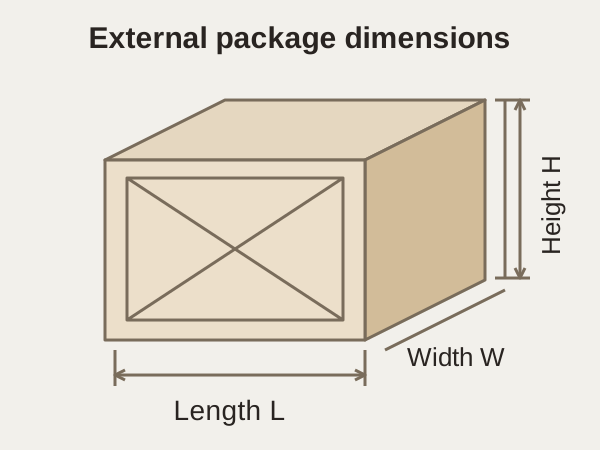
Formula: rectangular package volume (m³) = external length × external width × external height, in metres. Total volume = sum of the package volumes.
Worked example, assuming two identical packages with outside dimensions of 1.20 m × 0.80 m × 0.60 m: each volume = 0.576 m³; total = 2 × 0.576 = 1.152 m³. These are hypothetical dimensions for arithmetic only; confirm actual dimensions, weight and freight charging rules with the freight agent.
Send the requested arrival window with the destination. Distinguish it from order readiness, the carrier itinerary and the agreed delivery date. Material quantity alone does not determine the freight option or its timing.
Match package marks to the receiving plan
Specify the required series, colour, quantity and project-area labels before confirming packing. Use the same reference in the receiving team’s allocation schedule so each package can be directed to the intended wall zone.
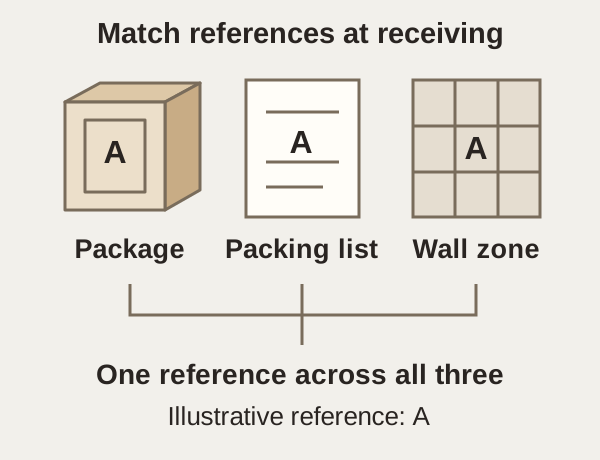
- Match package count and marks to the agreed packing list when receiving the order.
- Inspect wrapping, framing and visible edges before distributing packs to work areas; photograph visible damage with the package reference.
- Agree the carrier’s process for recording shortages or damage and the documents it requires; keep the references for discussing discrepancies.
Review quality-control checkpoints · Connect receiving to sample approval and supply
Compare delivery scope and handling costs
Define the delivery endpoint and included items before comparing totals. Request separate material, packing and freight lines when needed, then identify who arranges and pays for the following items.
Scroll the table horizontally to see all columns.
| Cost item | What to clarify in the quote | Effect on the project budget |
|---|---|---|
| Packing and handling | Protection, base, stackability and unloading needs | Repacking or extra handling if the pack does not suit the route or site |
| Freight and import | Transport endpoint, insurance, clearance, duties and taxes as agreed | Unbudgeted destination charges or the same charge counted twice |
| Site delivery | Local transport, access, unloading equipment and storage | Redelivery or extra movement to work areas |
| Damage or shortage | References, recording process and agreed claim or replacement scope | Replacement material, additional freight and work disruption, depending on the case |
Add only excluded items to the delivery budget. Use amounts from the supplier, freight agent and contractor rather than assuming a fixed saving or damage percentage.
Project questions
What differs between sample and bulk shipping inputs?+
Samples need the selected pieces, address and shipping option. Bulk packing and freight are reviewed using the product, size, quantity, destination and delivery requirements.
Is reference packing the same for every size?+
No. Use the selected product specification as a reference and confirm the packing for the actual size and shipping route; reference packing is not an order guarantee.
How should I submit an arrival window?+
Include the required date range with the destination, product and quantity so the freight options can be reviewed. A requested window is not a confirmed delivery date.
What to send us
Scroll the table horizontally to see all columns.
| Item | Why we need it | Example format |
|---|---|---|
| Product, format and quantity | Define the contents before reviewing packing | Product link, sheet size and quantities per finish |
| Delivery destination | Define the requested freight endpoint | City, country and postal code, or named port |
| Requested arrival window | Review options against the project need | Required date range, with installation date identified separately |
| Project-area labels | Discuss matching package marks to the allocation schedule | Finish and quantity schedule by floor or wall zone |
| Documents and forwarder | Review instructions before confirming the quote | Required document list and nominated-forwarder contact, if any |
We reply within 24 hours.
Send your project detailsMethod and sources
Updated October 2026. Service scope follows the published packing guidance and current enquiry process. General handling principles draw on the carrier’s cargo-packaging guide. Raw-wood scope and the processed-wood exemption follow IPPC ISPM 15, sections 2 and 2.1, accessed 18 October 2026. These establish general handling and standard scope; confirm the order’s packing, route and documents for the actual shipment.