What Is Flexible Stone?
Updated
Specifying flexible stone by its appearance name alone can leave you with the wrong material. HeyMaterials flexible stone is a thin, bendable engineered modified clay-mineral composite (MCM) for non-structural decorative wall cladding.
- Its mineral face creates a stone-look finish.
- Travertine-look or limestone-look describes appearance, not quarried stone.
- Confirm the product code, wall use and available data before approving a sample.
What it is made of
MCM means modified clay material. The family combines clay and mineral constituents with binders; backing, reinforcement and surface treatment depend on the product. The term does not define one recipe or one set of performance values. See composition and manufacturing for the product information to request.
Conceptual construction checklist, not a scaled section or a fixed layer recipe.
Use the sample and data sheet together. Check the face and texture direction, the named composition and the reverse side. If the supplied backing differs from the approved sample, resolve the product identity and bonding guidance before installation. A matching colour does not confirm matching construction.
What the collection names mean
Collection names help you choose the look. The travertine-look, limestone-look, sandstone-look and slate-look collections describe designed finishes in the composite. Use the product or sample code to identify the material when requesting files or ordering.
Use the look name to shortlist a finish and the product code to request matching documents.
If your brief requires genuine quarried stone, establish that requirement before selecting a finish. Compare the different material systems in flexible stone vs natural stone.
Where it belongs on a wall
Flexible stone is used for interior feature walls, reception areas, hotel and retail walls, and selected renovation overlays. Each wall still needs a suitable receiving surface and compatible installation system. Start with the application guides to match the wall context.
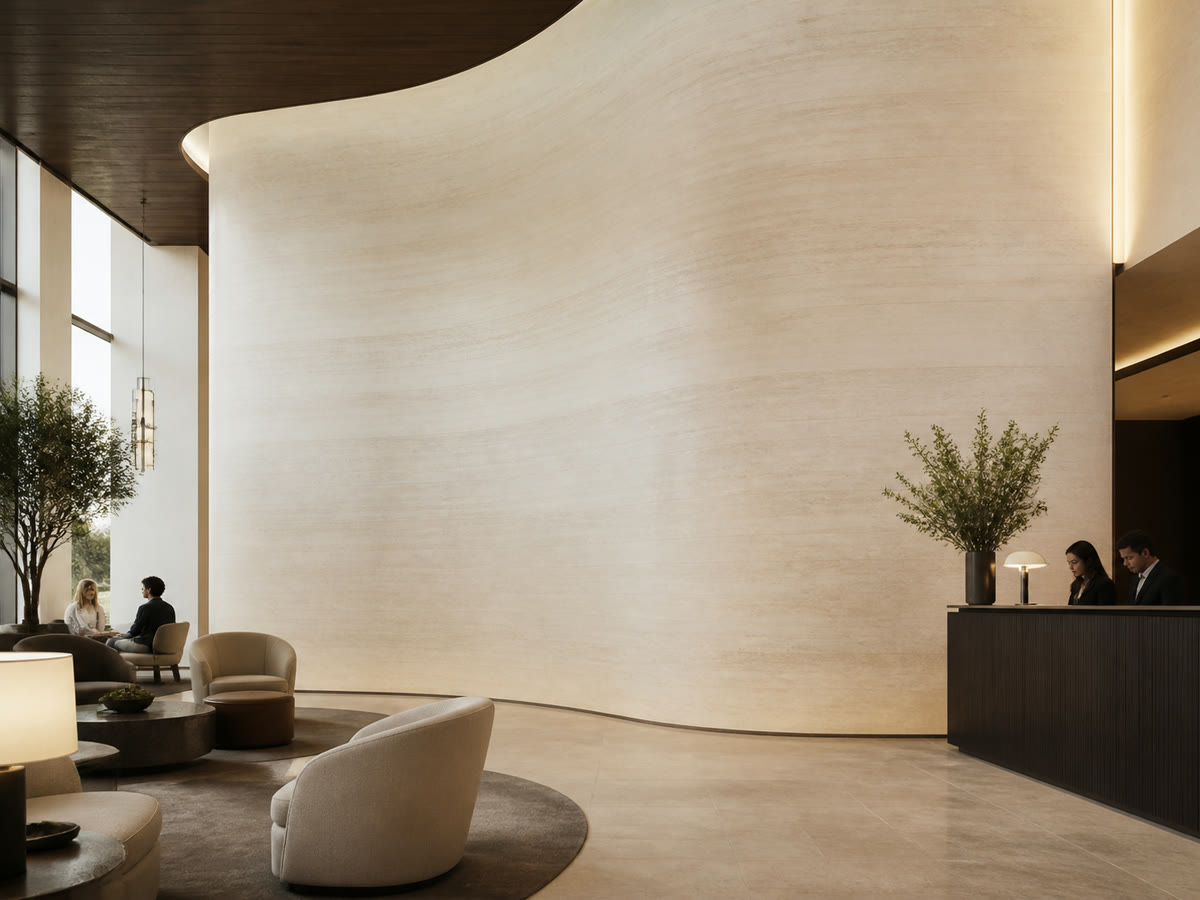
A decorative wall application example. The appearance does not establish the product, installation assembly or exterior approval.
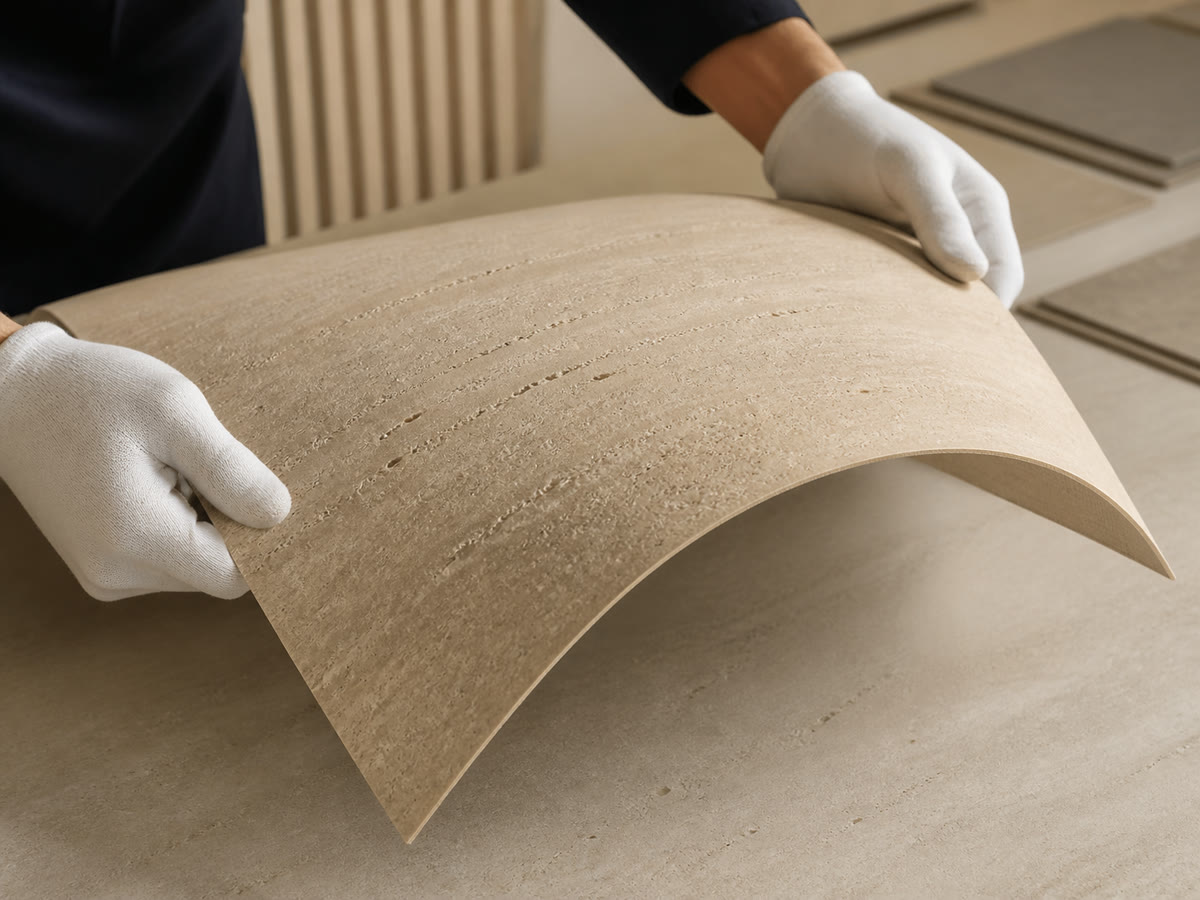
The thin construction allows selected sheets to follow curves, but the permitted radius and bending direction belong to the named product. Send the actual curve geometry and review a wall mock-up; the bent sheet photograph is not a radius specification. See curved walls and columns.
Exterior use requires approval of the exact product and complete wall assembly, including adhesive, substrate, exposure and applicable project documents. Flexible stone does not replace structural masonry, flooring, a thick stone slab edge or a mechanically anchored stone facade. This guide covers decorative walls.
How to specify it
Tie the finish choice to a named product, the proposed wall and the available evidence. Keep the specification open when any of these is unresolved. Confirm dimensions, thickness, tolerances and the weight basis for the selected format rather than assigning category-wide values.
Specification review sequence. Keep unresolved product or assembly details open.
| Check | Evidence to request | Dominant Failure Mode & Prevention |
|---|---|---|
| Product identity | Current data sheet and approved sample reference | A look name is mistaken for a composition. Match the code and construction. |
| Substrate and backing | Product installation instructions and compatibility guidance | An unsuitable bond interface is overlooked. Review the actual receiving surface and mock-up. |
| Curve or corner | Permitted radius, bending direction and proposed detail | The sheet is forced beyond its approved geometry. Confirm the detail for the selected product. |
| Performance requirement | Relevant report identifying the product, method, date and limitations | A result is transferred to a different construction. Check that the evidence covers the proposed assembly. |
For example, the public ASTM E84 summary explains that specimen support can affect surface flame-spread results. A test-method name alone therefore cannot establish the performance of your proposed wall. Ask for the actual applicable report and have the project reviewer check its scope.
Request the available product files, then request a physical sample to review colour and texture under project lighting. Finish approval and wall-assembly approval are separate decisions. Sample contents and shipping options are confirmed through the existing sample process before dispatch.
For a comparable quotation, include wall preparation, adhesive, joint and edge work, cutting allowance, packing and freight in the scope you discuss with the installer and supplier. A panel-only price leaves those costs unresolved. The Flexible Stone Buying Guide helps organize the purchase; the flexible stone catalogue lets you shortlist finishes.
FAQ
Are all reports available for every SKU?
No. Available documentation varies by product and intended use. Send the selected product code and required-file list through technical downloads so the available documents and any gaps can be identified before specification.
Can an old report be used for a new product?
Only after confirming that the tested construction matches the current product and that the project reviewer accepts the evidence. Check the product identification and construction described in the report; a shared finish name is insufficient.
Method and sources
Updated October 2026. Material identity and naming follow HeyMaterials’ composition explanation; enquiry steps follow the current sample, quotation and technical-document processes, checked on 18 October 2026. The ASTM E84-26a public scope and summary supports the test-support distinction above, not a product fire classification. Diagrams are conceptual review aids; the photographs illustrate material form and wall appearance.
Find other material guides and comparisons on Resources.
What to send us
Scroll the table horizontally to see all columns.
| Item | Why we need it | Example format |
|---|---|---|
| Product / series and look | Identify the finish | Code and reference image |
| Wall use, substrate and exposure | Define the review scope | Wall photos and site notes |
| Format and quantity | Establish the order basis | Dimensioned PDF and area schedule |
| Destination | Define the shipping scope | City and country |
We reply within 24 hours.
Send your project details