Flexible Stone Pros and Cons for Wall Projects
Updated
Flexible stone’s main advantages are its selected thin formats, decorative textures and ability to follow approved curves; its limitations are substrate dependence, batch variation and product-specific performance. This guide covers the engineered MCM wall finish supplied through our flexible stone catalogue. Compare the weight of the selected format, then approve the wall and bonding system separately.
- Choose it for a curved wall only after confirming the selected sheet, direction and project radius in a mock-up.
- Consider it for a tight reveal only after checking the complete added build-up, including preparation and adhesive.
- Consider overlaying existing finishes only after assessing the retained layers and proposed bonding system.
- Use another material for floors, worktops or structural duties; this range is decorative wall cladding.
Weight and thickness: compare the exact format
Panel weight can be an advantage, but the category has no single weight per square metre. Two published Architectural Texture formats show why the product code and sheet size belong in the same specification:
- FS-AT-03 Slate Stone, 600 × 1200 mm: approximately 2.5–2.8 kg per sheet, with a listed thickness of 2.3–2.8 mm.
- FS-AT-42 3D Block Mosaic, 1160 × 2975 mm: approximately 36.5 kg per sheet, with a listed thickness of 4–9.5 mm.
Use panel area mass (kg/m²) = sheet mass (kg) ÷ [width (m) × height (m)].
For the stated Slate Stone format: 2.5–2.8 ÷ (0.600 × 1.200) = approximately 3.5–3.9 kg/m². For the stated 3D Block Mosaic format: 36.5 ÷ (1.160 × 2.975) = approximately 10.6 kg/m². These are conversions of approximate catalogue values checked on 18 October 2026.
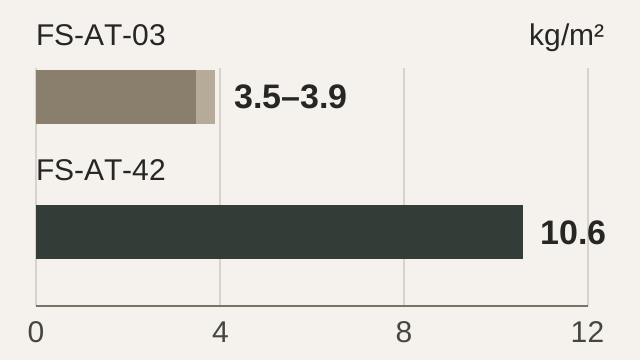
Panel-only comparison for the two formats above. The darker Slate bar ends at the lower estimate; the pale end marks the upper estimate. Adhesive, preparation layers and any retained finish need separate assessment.
Do not carry the small-format Slate figure across its other formats. The same product page lists the 1200 × 3000 mm sheet separately at approximately 15–15.5 kg. Confirm the current weight basis and tolerances for the format being ordered.
Curves, thin build-up and renovation: useful under the right conditions
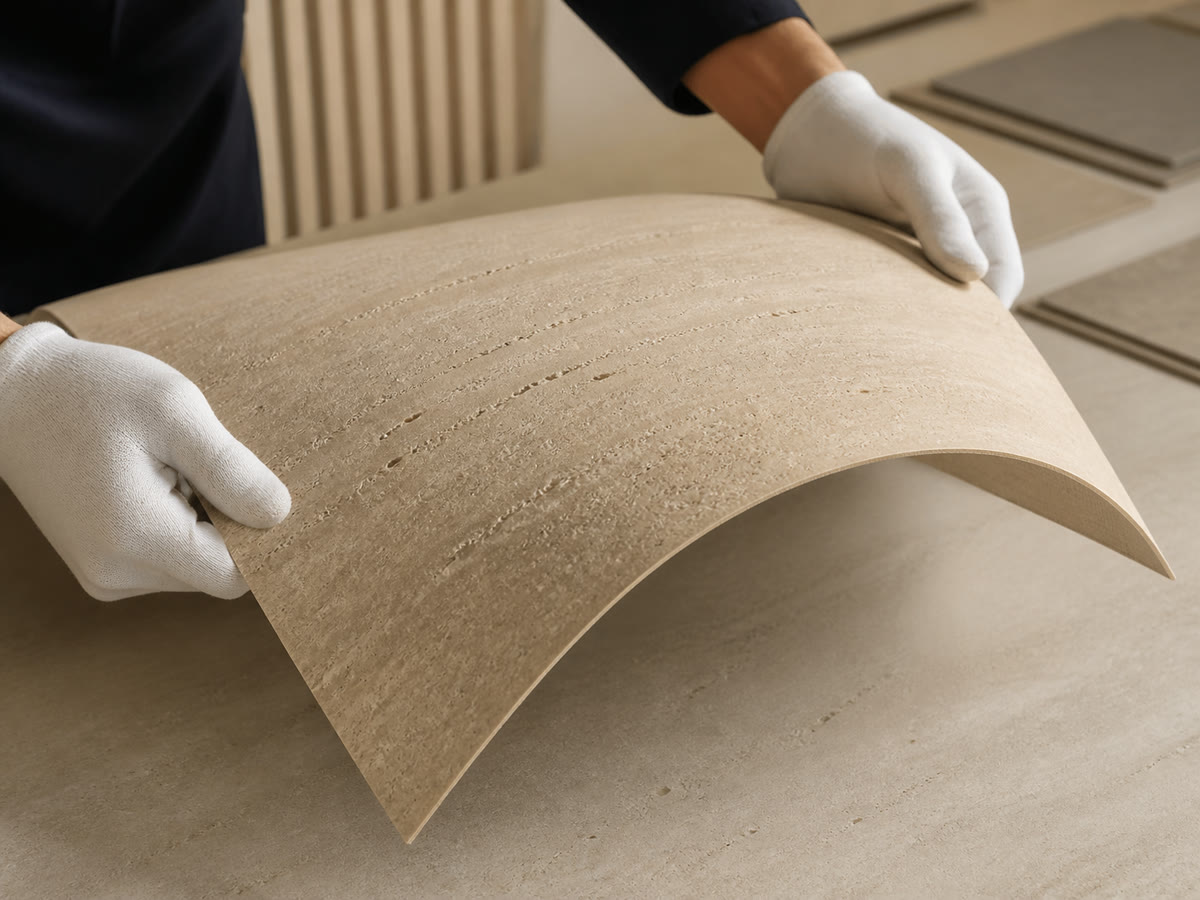
Flexibility helps a decorative finish follow a curve, while a selected thin format can help coordinate door reveals, sockets and adjoining finishes. The sheet-bending image near the opening illustrates the material’s form; the project drawing must establish the required geometry.
For curved walls and columns, send the radius, sheet direction, seam positions and adjoining flat-wall details. Confirm the usable bend for the exact finish and format in a full-size mock-up. If the proposed radius is smaller than the product-confirmed minimum for that direction, revise the finish or layout before ordering. If no minimum has been confirmed, obtain it rather than assigning a category-wide number.
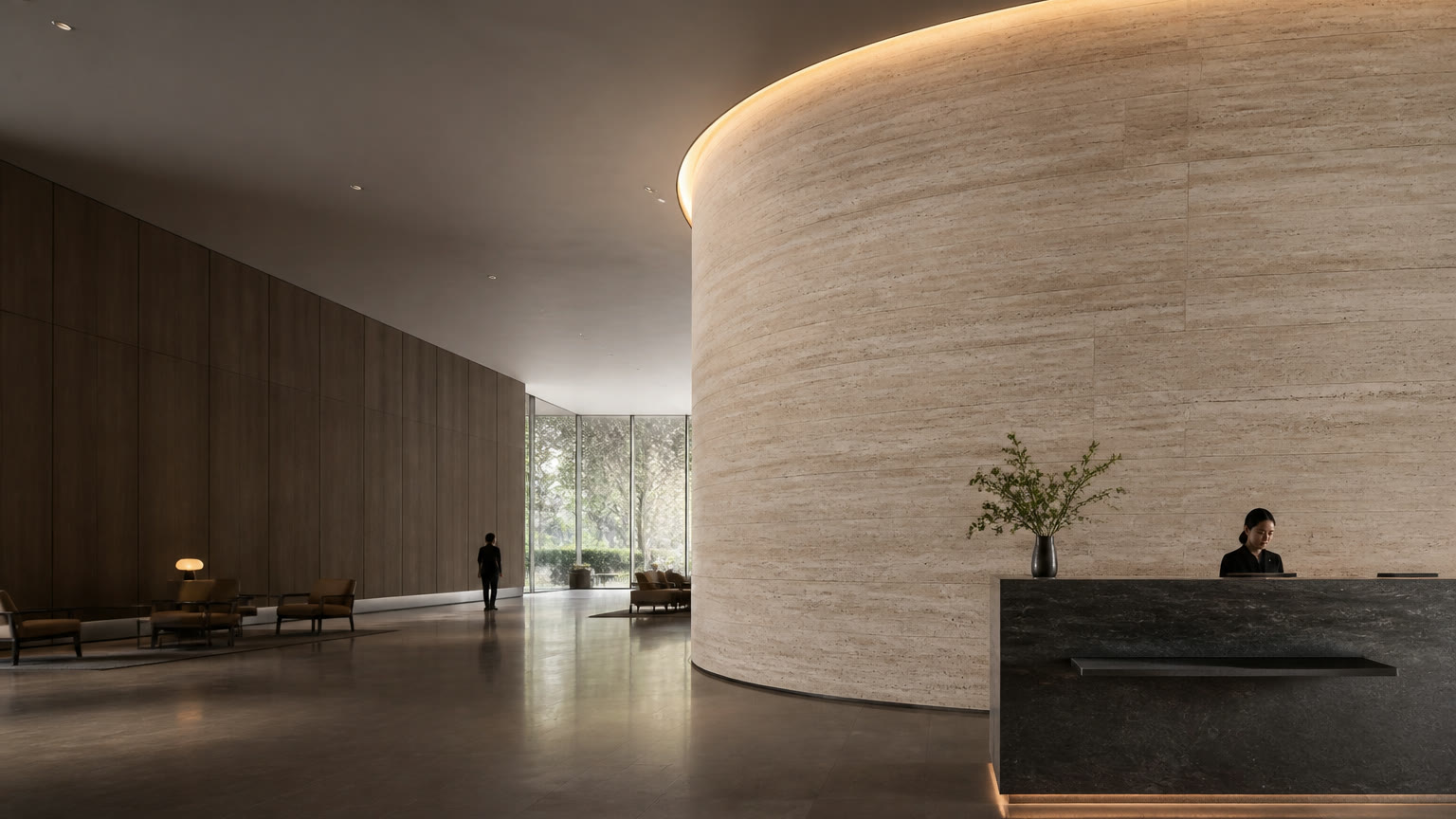
Appearance reference for the curved face and surrounding details. Show these transitions on the project drawing and include them in the mock-up; the photograph provides no radius measurement.
A thin panel still needs room for its bonding and preparation layers. If their combined build-up exceeds the available reveal clearance, revise the detail. Confirm those layer dimensions with the installation plan, rather than using panel thickness alone.
For a project-specific colour or format, use the custom flexible stone process and confirm the sample and production scope before ordering.
Renovation over existing tile, render or paint may avoid some removal work when the retained surface is suitable for the proposed assembly. Loose, damp or flaking layers need investigation and remediation first. The existing-surfaces guide identifies the information to review; the adhesive and substrate guide addresses the receiving wall and bonding system.
The limitations: where an advantage can fail
Flexible stone is a non-structural wall finish, and a successful specification must cover the surface behind it as well as the visible face. It is an engineered mineral composite; a brief requiring quarried geological stone needs a different material selection.
| Claimed advantage | Condition or limitation | Dominant Failure Mode & Prevention |
|---|---|---|
| Selected lightweight formats | Weight varies by product and size; panel mass alone cannot approve a wall | Weak retained paint or render separates behind the new finish. Assess retained layers and the complete bonding system before overlaying. |
| Curved-wall appearance | Finish, sheet direction, radius and seams must work together | Spring-back or edge rework at an unverified curve. Confirm the exact sheet in a full-size mock-up. |
| Thin renovation build-up | Allow for preparation and adhesive as well as the panel | Reveals or fittings no longer align. Coordinate the complete added thickness before cutting and installation. |
| Consistent decorative texture | A physical sample controls appearance, but batches can vary | Visible differences across a continuous wall. Agree the sample and batch allocation before supply. |
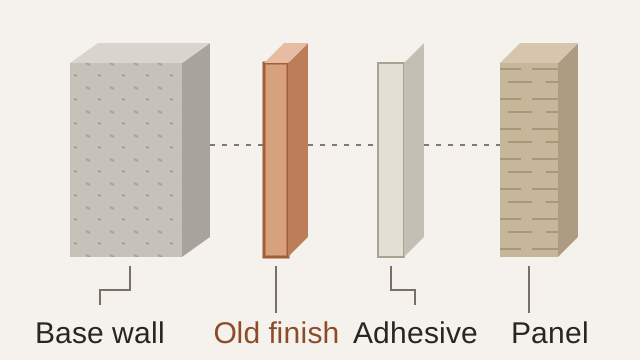
An overlay retains an existing layer behind the new cladding. Its condition remains part of the bonding decision. Schematic only: thicknesses, preparation and actual layers depend on the project.
Fire, wet-area and exterior claims also need evidence for the selected product and assembly. ASTM E84’s public scope concerns comparative surface-burning behaviour; a flame-spread index alone does not establish noncombustibility. Match the product code, backing, thickness and relevant mounting details to the report requested for the project. Our fire-performance guide explains that document review.
Likewise, a decorative face does not make the completed wall waterproof. Review the exposure, joints, edges and substrate using water and weather resistance. In impact-prone or frequently cleaned areas, assess the selected finish and proposed cleaning method; the material name gives no universal durability ranking against tile or natural stone.
Installed cost: compare the same scope
A sheet price cannot establish the cost of a completed wall. Ask each supplier or installer to price the same finish, layout, receiving surface and destination, then account for work that a panel-only quote may omit:
- Retained-surface investigation, removal or repairs, preparation, adhesive and finishing work.
- Cutting around openings, directional layout, offcuts, handling and access. Agree quantities from a cut plan instead of applying an unsupported universal waste percentage.
- Mock-up review, packing, freight and site delivery, plus matching spare material and the agreed cleaning requirements for later repairs.
Use the flexible stone price guide for quotation inputs and packaging and shipping to define delivery scope. Installation speed, freight savings and future maintenance cost depend on those project conditions; obtain the corresponding scope and rates before comparing totals.
The verdict: shortlist the finish, then verify the wall
Choose flexible stone when the selected format, appearance and confirmed curve suit the design, and the wall and installation system meet the project requirements. Choose another finish when the work needs floor or worktop duty, geological stone, or performance evidence that does not cover the proposed assembly.
Request samples to compare the physical finish under project lighting. Send the candidate SKU, wall and destination through our project quote process so the product, quantity, packing and available documents can be discussed together.
FAQ
Is flexible stone durable?
Durability depends on the selected finish and its exposure to impact, cleaning, moisture and weather. Provide the room use and cleaning requirements so the relevant product information can be reviewed. A bending demonstration cannot establish those properties; use the technical center to identify the documents needed.
Can the same weight per square metre be used for a larger sheet of the same finish?
Use the weight listed for that exact format. Slate Stone’s 600 × 1200 mm and 1200 × 3000 mm options have separate published sheet weights. The sizes, thickness and weight guide explains the basis to confirm before procurement.
What should go behind flexible stone on an existing wall?
The required preparation and bonding system depend on the base wall and every retained layer. Record those layers and their condition before selecting the assembly. See adhesives and substrates; a generic backer or adhesive recommendation cannot resolve an unknown existing wall.
Does an approved sample approve exterior use or fire performance?
A sample approves the reviewed appearance. Exterior suitability and fire performance require the corresponding product and assembly documents and project review. The sample-request process lets you state which available technical files you need alongside the finish sample.
Method and sources
Updated 18 October 2026. The weight calculations use the published Slate Stone and 3D Block Mosaic dimensions and approximate sheet masses for the formats named above. They compare panel mass per area; the installed assembly needs its own assessment. Installation, curve and procurement conditions follow the linked site guides and current sample/quote process. The ASTM E84 reference uses its public scope and significance summary, without assigning a rating to any product. Confirm current SKU data, available reports and project requirements before ordering.
What to send us
Scroll the table horizontally to see all columns.
| Item | Why we need it | Example format |
|---|---|---|
| Candidate SKU, finish and format | Identify the product and physical approval reference | Product link, sheet size and labelled sample photo |
| Wall substrate and retained layers | Define the receiving wall and existing condition | Wall description with overview and close-up photos |
| Area, curves and openings | Coordinate quantity and the proposed geometry | Dimensioned PDF with radius and sheet-direction arrows |
| Priority and document requirements | Identify the appearance and performance questions to resolve | Notes on cleaning, exposure and required product files |
| Destination | Define the packing and shipping enquiry | City and country or port |
We reply within 24 hours.
Send your project details